



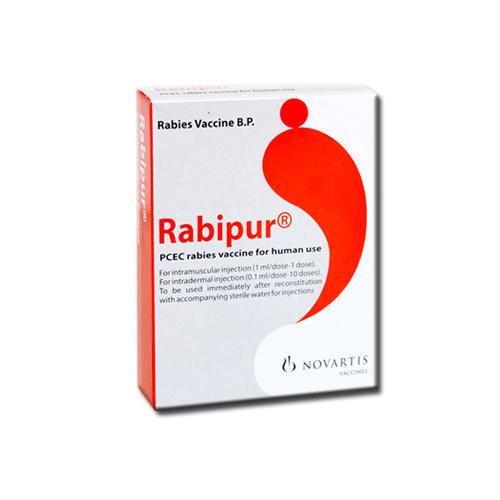
Rabipur Injection
400 INR/Unit
Product Details:
- Packaging Type Glass vial with sterile water for injection.
- Salt Composition Inactivated Rabies Virus (PCECV), excipients
- Indication Indicated for active immunization against rabies infection.
- Dosage Form Liquid injection for reconstitution
- Brand Name Rabipur
- Pacakaging (Quantity Per Box) 1 vial with diluent and disposable syringe
- Origin of Medicine Germany
- Click to View more
X
Rabipur Injection Price And Quantity
- 400 INR/Unit
- 500 Unit
Rabipur Injection Product Specifications
- Follow recommended schedule from healthcare provider; do not miss doses.
- 1 vial with diluent and disposable syringe
- As directed by physician; typically administered intramuscularly in a series of doses.
- Rabipur
- Store at 2C to 8C (Refrigerate, do not freeze).
- Adults and children
- Rabies Vaccine
- 24 months from date of manufacture
- Liquid
- Germany
- 1 vial
- Liquid injection for reconstitution
- Inactivated Rabies Virus (PCECV), excipients
- Glass vial with sterile water for injection.
- Indicated for active immunization against rabies infection.
- Purified, inactivated Rabies virus (PCECV) grown in cultured cells.
- Injection
- Other
- Prescription only
- After reconstitution: Clear to slightly milky white solution
- Pain, redness, or swelling at injection site; mild fever; headache
- Intramuscular injection
- Lyophilized powder for solution with diluent provided
- Approved by national drug regulatory authorities
- Hypersensitivity to any vaccine component or previous dose
- Available on packaging
Rabipur Injection Trade Information
- mumbai
- Western Union, Paypal, Cash Advance (CA), Cash in Advance (CID)
- 2000 Unit Per Week
- 15 Days
- As per Requirement
- All India
Product Description
RABIPUR works by causing your body to protect itself against rabies. The body makes substances that fight the rabies virus. They are called antibodies and circulate in the blood. If the rabies virus gets into someone who has been vaccinated against rabies, the antibodies kill the virus before it can cause damage.
After vaccination your body takes several weeks to develop enough antibodies to successfully fight rabies.
For vaccination against rabies you need a course of 3 to 5 injections.
After this course, most people produce enough antibodies against rabies. However, as with all vaccines, 100% protection cannot be guaranteed
Further booster injections of rabies vaccine may be needed every few years to ensure enough antibodies are present.
The vaccine will not give you or your child rabies.
The chance of a severe reaction from RABIPUR is very small, but the risks from not being vaccinated against rabies may be very serious.
How to Administer Rabipur Injection
Rabipur is delivered via intramuscular injection after reconstitution with the supplied sterile water. The clear to slightly milky white solution should be handled by a qualified healthcare provider, following the recommended dosage schedule. It is crucial not to freeze the vaccine and to use a new disposable syringe for each dose.
Precautions and Safety
Rabipur should not be administered to individuals with known hypersensitivity to any vaccine ingredients or those who have previously experienced allergy to a rabies vaccine. Always consult your doctor about any existing health conditions before starting the vaccine series.
Proper Storage and Handling
Store Rabipur in a refrigerator at 2C to 8C consistently. Do not freeze the product. Once reconstituted, use the solution immediately to ensure potency and effectiveness.
FAQ's of Rabipur Injection:
Q: What is Rabipur Injection used for?
A: Rabipur Injection is used for active immunization to prevent rabies infection in individuals exposed to the rabies virus, as well as for preventative vaccination in high-risk groups.Q: How should Rabipur be administered and in which form does it come?
A: Rabipur is administered via intramuscular injection. It comes as a lyophilized powder with a separate sterile diluent. After reconstitution, the solution should be clear to slightly milky white and given as directed by your healthcare provider.Q: When should Rabipur not be given?
A: Rabipur should not be used if you have shown hypersensitivity to any component of the vaccine or had an allergic reaction following a previous rabies vaccine dose. Inform your physician about any allergies before immunization.Q: Where should Rabipur be stored before use?
A: Store Rabipur in a refrigerator between 2C and 8C. Do not freeze it as freezing may compromise the vaccine's effectiveness. Keep the vial and diluent in their original packaging until ready to use.Q: What is the usual dosage schedule for Rabipur?
A: Dosage is determined by your physician and follows either a pre- or post-exposure rabies vaccination schedule, often requiring multiple doses at specified intervals. It is essential to complete the entire series without missing any doses.Q: What are the common side effects after receiving Rabipur Injection?
A: Common side effects can include pain, redness, or swelling at the injection site, mild fever, and headache. These symptoms are generally mild and temporary. Seek medical advice if you experience persistent or severe reactions.Q: What benefits does Rabipur offer?
A: Rabipur provides reliable protection against rabies, a potentially fatal viral infection. Timely vaccination offers crucial safety following potential exposure and for individuals at higher risk of contracting rabies.Tell us about your requirement

Price:
Quantity
Select Unit
- 50
- 100
- 200
- 250
- 500
- 1000+
Additional detail
Mobile number
Email

Other Products in 'Pharmaceutical Injectables' category


SPARK LIFESCIENCES
GST : 24ACKFS9546B1ZZ
Contact Details

- B No. 220, Samanvay Silicon, Beside Datta Mandir, Opposite Kalyan Cafe, Sayajigunj,Vadodara - 390020, Gujarat, India
- Phone :08045475752

- Mr Gaurang Patel (Partner)
- Mobile :08045475752

 Send Inquiry
 Send SMS
SPARK LIFESCIENCES
All Rights Reserved.(Terms of Use)
Developed and Managed by Infocom Network Private Limited.
Developed and Managed by Infocom Network Private Limited.

